
Lighting Outdoor Sports Facilities for Active Recreation – Implementation Guide
A practical resource with suggestions on how to implement lighting for outdoors sports facilities that maximises community engagement and participation.
The Lighting Outdoor Sports Facilities for Active Recreation Implementation Guide was developed as a result of research into if and how lighting public outdoor sports facilities could encourage more Victorians to be physically active.
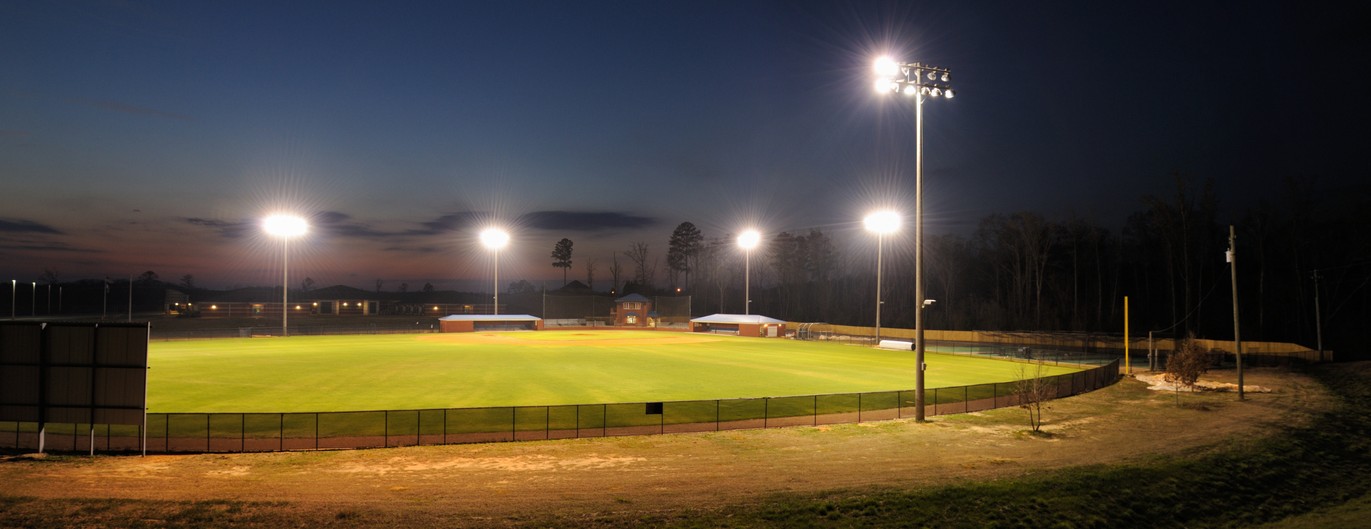
The research provided insights into which barriers to participation may be removed by providing suitable lighting, and what other factors need to be considered to encourage use by the community outside of organised sport usage.
The implementation guide includes key insights from the research, and provides practical suggestions on how to implement lighting for outdoor sports facilities that maximises community engagement and participation.
Read the guide below, or skip to the bottom of this page to download a copy.
Introduction
The Active Victoria 2022-2026 strategy aims to build a thriving, inclusive and connected sport and active recreation sector that benefits all Victorians. In line with this strategy, Sport and Recreation Victoria commissioned research to explore if and how lighting public outdoor sports facilities could encourage more Victorians to be physically active.
The research provided insights into which barriers to participation may be removed by providing suitable lighting, and what other factors need to be considered to encourage use by the community outside of organised sport usage.
In this guide you’ll find:
- key insights from the research
- practical suggestions on how to implement lighting that maximises community engagement and participation.
About the research
Conducted by: SEC Newgate Research on behalf of Sport and Recreation Victoria
Phase 1 Knowledge review: Review of published literature and case study interviews with 3 councils (Greater Bendigo City Council, Maroondah City Council, and Wyndham City Council).
Phase 2 Community research: Online community forum with 40 Victorians aged 18-70 over 2 days in June 2025. Participants were split evenly across the general community and inactive women aged 35-64.
Research insights
- Low usage by women and gender-diverse people
- Sports facilities are underused by these groups for general recreation
- Safety is a prerequisite for outdoor activity after dark
- Safety concerns (for example, fear of assault, poor visibility) are major barriers to night-time activity. Lighting may help mitigate safety concerns, especially if this makes it more likely that others will be present.
- Interest increases with exposure to promotional material
- Seeing images and local participation programs boosted interest and perceived feasibility, for example, understanding there would be set times when lights would be on for the general public.
- Social proof and inclusive messaging were effective motivators, for example, the program is for everyone.
- Lighting alone isn’t enough
- Not all facilities will be suitable for community use, even with lighting. The space needs to feel inviting and appropriate for active recreation – ideally with flat walking paths.
- Execution matters: lighting must be paired with promotion, accessibility, and community engagement.
- Preferences for automatic lighting at set times, group activities, and dog-friendly spaces were common.
- Safety in numbers and group activities increased comfort and likelihood of use.
- Environmental and social factors matter
- Use increases with green spaces, amenities, foot traffic, and a sense of belonging
- Perception of ownership can be a barrier.
There is no universal solution
- Experience and perceptions vary. Barriers (particularly safety) appear to be more prevalent amongst women (and potentially also gender diverse people) than men.
- People are less likely to be active when it is cold and dark, but for many (especially working people) this is the only time they can be active outside of the summer months.
- Some people definitely don’t want to use the space while or sport is occurring, but others feel safer with the presence of other people
- For some, being able to bring their dog was essential, but for others being around off-lead dogs was off-putting.
Implementation Checklist
Practical suggestions to increase community use of lit sports facilities for active recreation.
Target suitable facilities
- Prioritise well-activated facilities with existing daytime use/foot traffic
- Choose locations in high-density residential areas with easy access (public transport, parking, flat paths).
- Select sites with additional amenities (for example, walking tracks, fitness equipment, courts).
- Design for safety
- Ensure end-to-end lighting: facilities, paths, car parks, and access routes
- Use warm, non-intrusive lighting that enhances visibility without glare (i.e., not too bright)
- Avoid creating dark patches or overly bright zones.
Make it easy to use
- Install automatic lighting – avoid requiring pre-booking or manual activation of lights.
- Have lighting on at set, published times so visits can be planned. Keeping the hours consistent can create confidence and help people create participation habits.
- Focus on evening use – most demand is in the 2–3 hour window directly after dark.
- Balance needs; manage organised sport overlap.
Create a welcoming environment and address perceptions of ownership
- Make it clear that facilities are for everyone, not just organised sports clubs.
- Include signage and messaging that welcomes all users (not just sports teams) to foster a sense of belonging.
- Provide a staff presence or group activities to support first-time users, where possible.
Promote inclusion
- Promote lighting programs to build awareness and social proof.
- Promote the initiative using inclusive messaging and imagery: ‘This is for you’ and ‘Others like you are doing this.’
- Use social proof: show people like the target audience enjoying the space, use images depicting a range of age groups.
- Tailor materials to local audiences, including CALD communities.
- Highlight safety, convenience, and enjoyment in communications.
- Use multi-channel promotion: social media, newsletters, signage, postcards.